
Software localisation that ships with your release
UI strings, documentation and localisation testing in 25+ languages, delivered in your string format inside your release cadence.
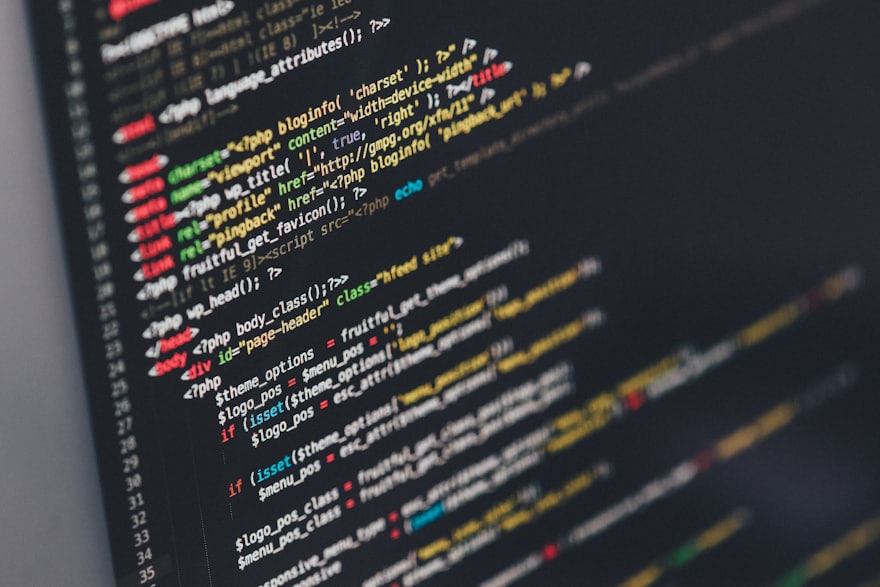
Software localisation adapts applications for other markets: UI strings, error messages, documentation and regional formats for dates, numbers and currencies. Orion Translations localises desktop, SaaS and enterprise software in more than 25 languages, working natively in RESX, XLIFF, JSON, PO and similar formats, with localisation testing on the build.
Enterprise buyers read your error messages
Software sells on trust, and nothing erodes trust faster than a settings screen in broken Spanish or a date that renders backwards. Procurement evaluations literally screenshot these things. Localisation quality is product quality, and in many European markets it decides whether your product is shortlisted at all.
We localise software the way engineering teams need it done: strings translated in your format with placeholders intact, terminology locked in a termbase, documentation matching the UI word for word, and native testers on the staging build before release. Updates ride your release cadence, not a translation agency calendar.

What does software localisation include?
| Layer | Scope | Detail |
|---|---|---|
| UI strings | Menus, dialogs, errors, notifications | Placeholders, plurals and limits preserved |
| Regional formats | Dates, numbers, currencies, addresses | Per-locale conventions applied |
| Documentation | Help centre, guides, release notes | Terminology identical to the UI |
| Localisation testing | Native QA on staging build | Issues logged in your tracker |
| Continuous localisation | Per-release translation batches | 24-72h, same team every sprint |
How much does software localisation cost?
Per word with heavy translation memory leverage: software strings repeat across modules, and updates reuse everything unchanged, so the cost curve falls steeply after the first release. Documentation follows technical translation rates, indicatively 0.11 to 0.15 EUR per word for English-Spanish. Send an export to info@oriontranslations.com for a fixed quote within one business day, including a realistic figure for your ongoing release cadence.
Desktop, SaaS, mobile or game?
This page covers desktop, web and enterprise software. Mobile apps have their own store-listing and device-testing workflow at app localization, and games their own creative pipeline at video game localisation. The three share infrastructure, glossaries, memory, continuous cadence, so multi-surface products get one consistent vocabulary everywhere.
Which languages do you localise software into?
More than 25. European coverage is the core, Spanish (Castilian and Latin American), French, German, Italian, Portuguese, Dutch, Polish and the Nordics, driven by EU market entry, plus wider combinations on request. We tell you honestly where we are not the right partner, such as right-to-left-first products needing in-country engineering.
Your product, professional in every locale it ships to.
Get started
Request a Quote
Upload your document and tell us what you need. We respond within one business day with a fixed price and delivery date. No hidden costs. No obligation.
Frequently Asked Questions
- Software localisation adapts an application for other languages and regions: UI strings, error messages, documentation and help content, plus formats for dates, numbers, currencies and addresses. It goes beyond translation, covering text expansion in layouts, right-to-left support considerations and the conventions each market expects from professional software.
- Translation converts the words; localisation makes the product behave natively: a German decimal comma, a US date format, a Spanish error message that reads like it was written by a support engineer rather than a dictionary. Buyers judge software credibility partly on this polish, which is why enterprise deals often stall on poor localisation.
- UI strings and help content are priced per word with translation memory discounts on repeats, and software repeats heavily: settings, errors and dialogs recur across modules and versions. After the first release, each update costs a fraction of the original. Send a string export via the quote form for a fixed per-language price within one business day.
- RESX, PO/POT, XLIFF, JSON, YAML, properties files, strings.xml and iOS .strings among others, returned with keys, placeholders and plural rules intact. For continuous delivery we translate per release batch against your glossary, typically within 24 to 72 hours, so localisation never blocks a deploy.
- Yes: user guides, knowledge bases, onboarding flows, tooltips and release notes, kept terminologically identical to the UI so the help article says exactly what the button says. Mismatched UI and documentation is the most common self-inflicted support burden in localised software.
- Native speakers run the localised build to catch truncated labels, concatenation bugs, untranslated strings and format errors in context. We test against your staging environment and log issues in your tracker. For customer-facing software we consider it essential, not optional.
- Yes. We import your existing memories and termbases, clean them if needed, and work inside or alongside your TMS. If you have no language assets yet, we build them from project one, and they remain yours: you can take glossary and memory with you at any time.